Modeless

I’ve spent a lot of time and effort making my devices work contextually, adjusting how they function based on whether I’m working, spending time with family, sleeping, writing, or doing something else entirely. Apple offers a robust set of features for this sort of thing:

  • Focus modes allow you to change who can contact you and which apps can notify you at any given time. They can also be used to show different Lock Screens, Home Screens, and Apple Watch faces depending on which mode is active.
  • Focus filters adjust what information apps can show you based on your Focus mode, such as hiding your work email or calendar when you’re at home.
  • Safari profiles contain different sets of account logins and bookmarks that you can switch between as needed.
  • Shortcuts automations can run in conjunction with these other features to adjust just about anything you like, including device settings, the lighting in your home, and more.

These features can be activated and switched between based on a variety of triggers, including the time of day and your location. The feature set is truly comprehensive, giving users the ability to finely control every aspect of their devices to fit whatever context they’re in at the current moment. And despite the power of these features, they’re also easy to set up and intuitive to use.

I’ve used all of these options extensively over the years. I never went deep enough into the Focus system to create custom Home Screens and Lock Screens for every area of my life; after all, my core apps don’t really change from context to context. But when it comes to muting notifications, filtering information in apps, and switching between accounts in the browser, I’ve been all in.

My Work Focus mode would kick on as soon as I arrived at the building, allowing group chats with coworkers to notify me and switching to my Work Safari profile so I could access my Google and other accounts for work. When I left work, my devices would automatically switch to my Personal mode, muting work texts and emails. My Freelancing mode would grant access to other accounts and tab groups in Safari. My Writing mode would block out everything except texts from my wife and open my writing app automatically. Exercise, Mindfulness, and Sleep modes would automatically activate when I needed them, muting notifications altogether. And when it came time to record a podcast, my Podcasting mode would not only mute notifications from everyone except my co-host; it would also turn off my air conditioning and open my notes for recording.

I created modes for everything so that no matter what I was doing, my devices were always perfectly in sync with my needs and availability. It kind of felt like magic.

All of that changed recently, though, when I wiped out all of my Focus modes and Safari profiles across my devices. That’s right: I’ve gone modeless.

I want to stop for a moment to note that I am not being prescriptive here. I am not saying that these features are bad or that you shouldn’t use them. I’m not even saying that I’ll keep my devices this way forever. But it’s a new approach I’m trying after years of the same, so I thought I’d share it.

Several factors influenced my decision to de-contextualize my devices:

  • My life has become less segmented as of late. I used to constantly switch between personal time, work, freelancing, podcasting, and more, with each context needing its own setup, but things are more simplified now. I pretty much divide my time between work, personal time, and sleep, and that’s it.
  • I’ve found myself spending more time fiddling with my settings than the time I’m actually saving by using them. Whether I’m using a finalized OS release or a beta version, I find that keeping the Focus system running smoothly requires some amount of maintenance – often, toggling settings like automations and filters off and back on to get them working again when I notice they’ve stopped.
  • Even when everything works exactly as expected, I still find myself sometimes needing to do mini context switches or blend aspects of different contexts, such as checking my personal Audible account while I’m in my work Safari profile, and that can be painful when I’ve set up such a rigid system.
  • The filtering features of Focus modes, which are meant to keep irrelevant information out of sight, can be easily bypassed. I developed a bad habit of turning off the filters to check work messages all the time anyway, sort of defeating their purpose.

After realizing I was signed out of a website because I was in the wrong Safari profile (again), I thought to myself, “What if I didn’t have to switch? Could a more unified approach work?” After pondering that idea for a couple of days, I decided to give it a try.

I started by moving all of my Safari bookmarks into my Personal profile, trimming the ones I used the least to keep the list to a manageable size. I’m probably the only person in the world who cares about this, but I’ve found that having 12 favorite websites in Safari looks the best across devices because it divides evenly by the number of sites in a row on my iPhone (4), iPad mini (6), iPad Pro (12), Vision Pro (6), and Mac (12) with no blank spaces. Yes, this is the kind of thing I spend my time figuring out.

I also had one Safari tab group that I wanted to keep around for work, so I moved it over to the Personal profile as well. With everything consolidated, I was able to delete my Safari profiles, simplifying my setup into a single set of bookmarks, tab groups, and history.

Then, it was time to clean up my Focus modes. I was planning to delete every mode except for Do Not Disturb, giving myself a single option for muting notifications anytime I needed to, but I found out that detailed sleep tracking on the Apple Watch requires the Sleep mode to be active, so I left it on the list as well. I went from nine Focus modes down to two, though, so it was a major simplification. (In case you’re wondering, I don’t use the Driving mode because CarPlay blocks most notifications on its own, and I’ve never tried the Reduce Interruptions mode because I don’t want AI anywhere near my notifications. I’ll handle them myself, thanks.)

It’s been about a week since I made this change, and so far, I’m quite happy with it. I’m no longer spending time fiddling with settings or switching between modes to access the information I need, so ironically, removing Focus modes has meant I’m spending less time on my devices. I’m having to exercise more self-control, choosing to let some messages and notifications sit without being dealt with while I’m spending time with my family, but I think that’s a good thing. And I enjoy having a simple Do Not Disturb toggle when I need it. The all-or-nothing approach to notifications seems to be working for me.

The only real pain point I’ve run into is dealing with websites where I have multiple accounts, such as Google and Amazon. Their built-in account switchers help to a point, but they’re still not as elegant as using Safari profiles to keep things separated. If needing a couple of extra clicks to access my work’s YouTube Studio page is the worst of my problems, though, I’d say things are faring well.

When life changes come your way – whether you’re happy about them or not – they serve as opportunities to rethink things. This has been one of the results of rethinking things for me, and I believe it’s part of a positive trend. Less compartmentalization and more cohesiveness. Less tinkering and more living. No modes, just me. Yeah, I think that sounds pretty good.

At least, for now. Who knows if it’ll last forever? If there’s one thing we can be sure of, it’s that none of us can predict what the future holds. But for the time being, the modeless life is the one for me, and I’m making the most of it.

The iPad mini in a Folding iPhone World

The iPad mini is one of my all-time favorite Apple devices. Despite some skepticism when the company first split the iPad line by introducing a smaller size, I quickly got onboard when the second generation went retina, and the mini was my trusty companion throughout grad school classes and beyond. In 2021, the mini entered the modern iPad era with an all-screen redesign, prompting me to upgrade to a device I still use today and have only come to love more and more with time. You’ll hardly catch me without it.

It’s the ideal device for so many of the things I do every day. Whether it’s reading books, taking notes in a meeting, catching up on the news, reviewing old photos, watching YouTube videos, or proofreading article drafts, there are so many tasks that lend themselves towards the iPad mini’s expansive yet graspable size. It’s bigger than the biggest iPhone, which makes it capable of handling the more complex app layouts available on iPadOS, but it’s not too big to hold comfortably in one hand for an extended period of time, something that can’t universally be said of the 11” iPad Pro or iPad Air.

I could go on and on. Suffice it to say that the iPad mini holds a special place in my heart and my daily routine. I love that tiny thing.

And if rumors are to be believed, it’s on the cusp of another big upgrade: OLED. One of the most common complaints I hear about the mini is that it uses older, cheaper LCD screen technology rather than the latest and greatest like the iPad Pro and iPhone. Although the mini’s LCD screen does hold its own, an OLED upgrade promises to bring improved color, increased brightness, and possibly even a thinner overall design, so I’m very interested to see what that looks like. Given that my A15 iPad mini likely won’t get software updates for much longer, the debut of a redesigned OLED version seems like the perfect time for me to upgrade and pass my mini along to the next generation of iPad mini fan (namely, my kid).

The complicating factor in that decision, of course, is the folding iPhone, currently dubbed the iPhone Ultra by the Apple blogosphere. Remember when I said the iPad mini is bigger than the biggest iPhone? That’ll still be true once the folding iPhone is released, but the gap will be much narrower than before. The iPhone Ultra is rumored to have a 7.8” screen when unfolded with an aspect ratio similar to and only slightly smaller than the iPad mini’s 8.3” display. I’ve seen a similarly-sized screen in person on Samsung’s Galaxy Z Fold 8, and it seems like it could be a great size for the sorts of things I do with the iPad mini.

The iPhone Ultra will have the benefit of being always with me, folded in half and living in my pocket when I’m not using it but always ready to be unfolded at a moment’s notice. It’ll also have the latest screen technology available from Apple, likely even exceeding the capabilities of the upcoming OLED iPad mini in terms of brightness and refresh rate. It’ll have a cellular connection and thus be always up-to-date. And did I mention that it’ll fit in my pocket? I’ve tried carrying my iPad mini that way, and it just isn’t practical; the mini necessitates a bag if I want it with me.

That isn’t to say the iPhone Ultra will be a perfect iPad mini replacement. For one, it’s likely to cost multiple times the price of the iPad mini at over $2,000, and I probably won’t be keeping it around for years like I have my trusty tablet. We have no idea how durable the folding iPhone will be. I can’t imagine Apple would release a product – especially a premium one – that couldn’t last several years, but folding screens inevitably suffer wear and tear while traditional screen technology has proven its longevity. Then there’s that half inch of screen real estate that will be lost going from the iPad mini to the iPhone Ultra. Will that be a deal-breaker? Not necessarily, but it all comes down to one thing: software.

And that’s the part of the story that I’m most intrigued by. We don’t yet know how iPhone apps are going to translate to the iPhone Ultra’s larger screen. Apple introduced resizable layout technologies at WWDC to help developers prepare their apps for such a future, but how those adaptive layouts will work in practice and how quickly developers will adopt them has yet to be seen. Will apps on the larger screen act more like iPad apps, with multi-pane sidebars and rich toolbars, or just enlarged iPhone apps, with full-screen views and bottom-anchored navigation? I’d very much prefer the former, but the jury is currently out.

I have no doubt that the iPhone Ultra will be an incredible piece of technology, and I already know that Apple’s going to hype the thing up in its announcement video to the point that I’ll be desperate to try one in-hand as soon as possible. But the thing I’m really going to be interested in is the software story, both in terms of app layouts and multitasking. I’m hoping the iPhone Ultra will act more like an iPad mini than a large iPhone when it’s unfolded, and if that’s the case, that’ll make the argument for the iPhone Ultra even stronger.

Where does that leave the iPad mini? It’s a mixed bag. For most people, a folding iPhone isn’t even a consideration, especially at the high prices that have been rumored. But the iPad mini is already a niche product, and I imagine the folding phone will cut into its customer base at least a little bit. Apple isn’t shy about selling multiple products with overlapping screen sizes and use cases (see the three 11” iPad models currently for sale), so I’m sure the iPad mini and iPhone Ultra can peacefully coexist. But how they’re differentiated and marketed to their target audiences, I’m not sure.

I’m even less sure what it all means for me personally. I really want to give the folding iPhone a try, but I have no idea whether it’ll be the right solution for me long-term. If the software leans more in the iPad direction, I could see myself loving it and never going back to a slab phone. Then again, I’m a registered iPhone Air weirdo, so there’s a distinct possibility I live the folding phone life for a time as an experiment and ultimately go back to the Air – or switch things up totally and move to the 20th anniversary bezel-less iPhone that’s been rumored for next year. It’s a weird time for iPhones, and I don’t have a clear picture yet of which direction I’m going to go. It’ll be impossible to know until I’ve lived with the folding iPhone for a while.

Behind the haze of that confusion, the shining light of the impending OLED iPad mini looms. I don’t feel like there’s space in my personal setup for both a folding iPhone and an iPad mini. They’re just too similar in size and use case for me to justify paying for one of each. The smart financial move would be to upgrade my iPad mini this fall and my iPhone Air in the spring. I could pick up both for less than the rumored cost of the iPhone Ultra. I just don’t think I’ll be able to resist the adventure of trying a new form factor like the folding iPhone, though. It’s a mystery, but it’s one I feel I must explore.

Realistically, I’m probably going to spend at least a year with the folding iPhone. If it works for me, that’ll be great. I’ll know I’m a folding phone person, and I can put my thoughts of the iPad mini behind me. And if I end up going back to a slab iPhone down the road, the OLED iPad mini will still be there waiting to welcome me back – if I can afford it after the expensive folding phone experiment, of course.

My future with the iPad mini is going to be determined, I think, by the folding iPhone’s software. If it acts like an iPhone with a bigger display, I don’t think that’s going to replace iPadOS for me. But if it’s truly an iPad mini I can fold in half and carry with me everywhere, then that’s the dream of the one-handed tablet brought to its logical end point, and it’ll be a beautiful thing indeed.

No matter what, the iPad mini’s essence will live on in my setup for years to come, whether that’s as a small tablet I carry in a bag or as a phone I can pull out of my pocket and unfold into a small tablet anytime I want. I don’t know which way it’ll go, but I can’t wait to find out. It’s an exciting time to be a fan of small Apple tablets.

OS Beta Pros and Cons

With the public betas of iOS 27 and its corresponding updates on Apple’s other platforms now available, I broke down the reasons for and against installing the betas on your devices for the Club MacStories Monthly Log. It’s a question I’ve thought about a lot over the years, and there are compelling reasons both for and against jumping on the beta train, so if you’re on the fence, I invite you to check out the story.

visionOS 27 Preview

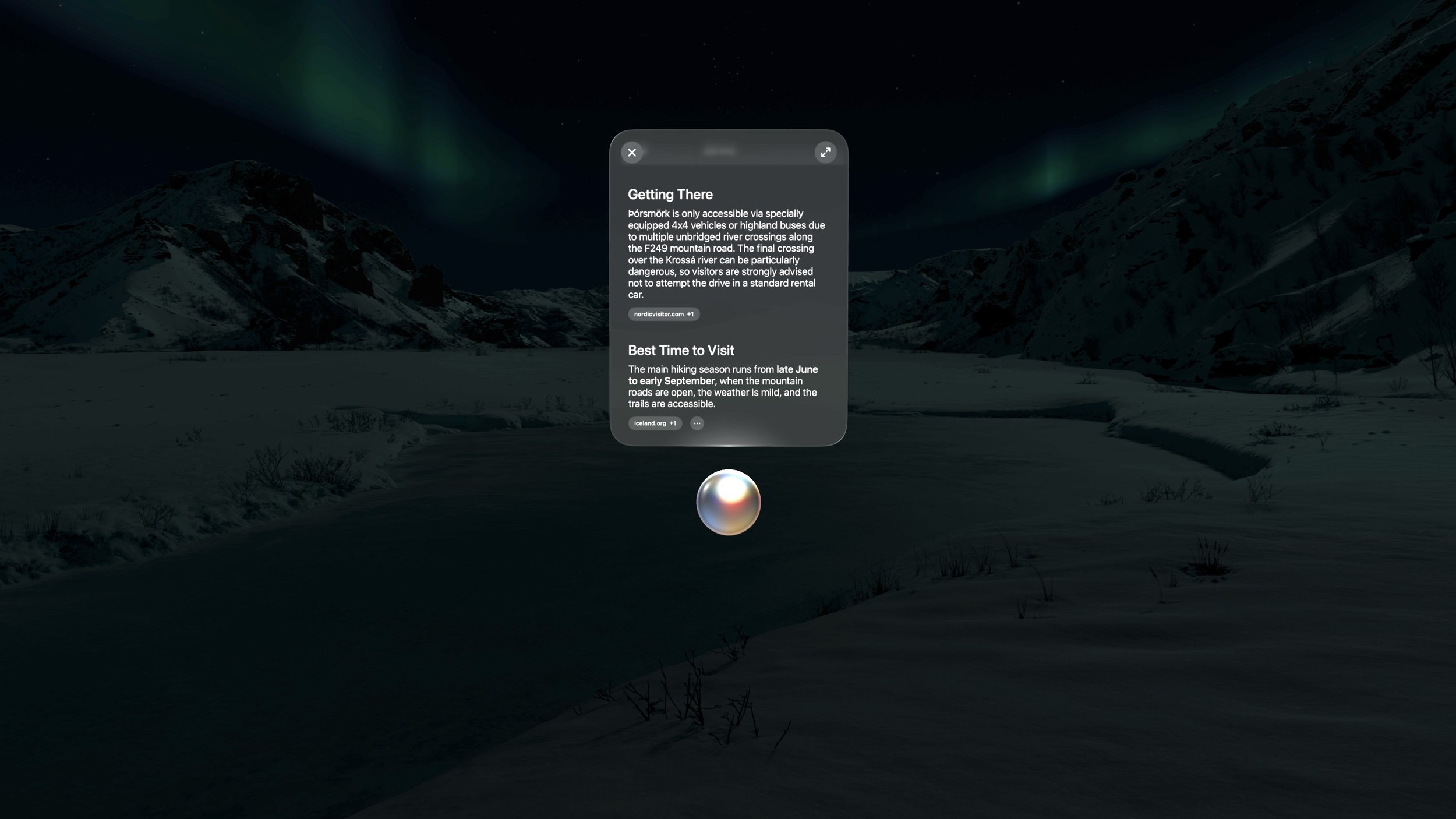
With the public betas for iOS, iPadOS, watchOS, macOS, and tvOS 27 releasing yesterday, the team at MacStories shared a collection of preview stories to offer a glimpse at what it’s like living with the updates. visionOS 27 is only available as a developer beta, but I previewed the new version nonetheless. Early adopters – like Vision Pro owners – are also prime candidates to be beta testers because they like to get the latest and greatest before anyone else.

If you’re considering jumping on the beta train, check out my preview and those from the rest of the team to see how they’re working out in day-to-day use.

It Just Works

My new story for Club MacStories is a throwback to my early days as an Apple user and an expression of hope that this fall’s software updates for Apple devices might recapture some of that magic through simplicity and reliability. “It Just Works” is a slogan that the company has long applied to the Mac, iPhone, iPad, and its other products. I think this year might be the year it becomes a reality in a way we haven’t seen in quite some time.

I’d love it if you checked out the story in the Monthly Log.